What Nobody Tells You About Football Training Drills
The best football training drills are not the flashiest exercises; they are structured practices that transfer directly to match actions such as scanning, receiving, passing, accelerating, defending,....

What Nobody Tells You About Football Training Drills
The best football training drills are not the flashiest exercises; they are structured practices that transfer directly to match actions such as scanning, receiving, passing, accelerating, defending, and finishing. For beginners, youth players, and competitive athletes training in the United States, the United Kingdom, Australia, and Europe, a balanced session should combine technical repetition with decision-making and controlled intensity. A practical 60-minute session can include 10 minutes of dynamic movement, 15 minutes of ball mastery, 15 minutes of passing under pressure, 10 minutes of speed or agility, and 10 minutes of finishing. The Fédération Internationale de Football Association (FIFA) and Fédération Internationale de Football Association Training Centre both emphasize game-relevant repetition rather than isolated movement alone. Evidence-based workload guidance also supports gradual progression instead of sudden volume increases. Start with three focused sessions per week, record successful actions and recovery quality, then increase difficulty only when technique remains stable.
The common misconception is that doing more drills automatically makes you a better footballer. It does not. Ten careless minutes of uncontrolled touches may be less useful than five deliberate minutes in which your head comes up, your supporting foot is correctly placed, and your next action has a clear purpose.
Listen up — this is the part that matters: the best football training drills are selected according to a player’s weakness, position, age, available space, and match demands. Match Daily approaches football through tactics, player performance, and tournament analysis, but the same principle applies to training: a drill is valuable only when it improves an observable football action.
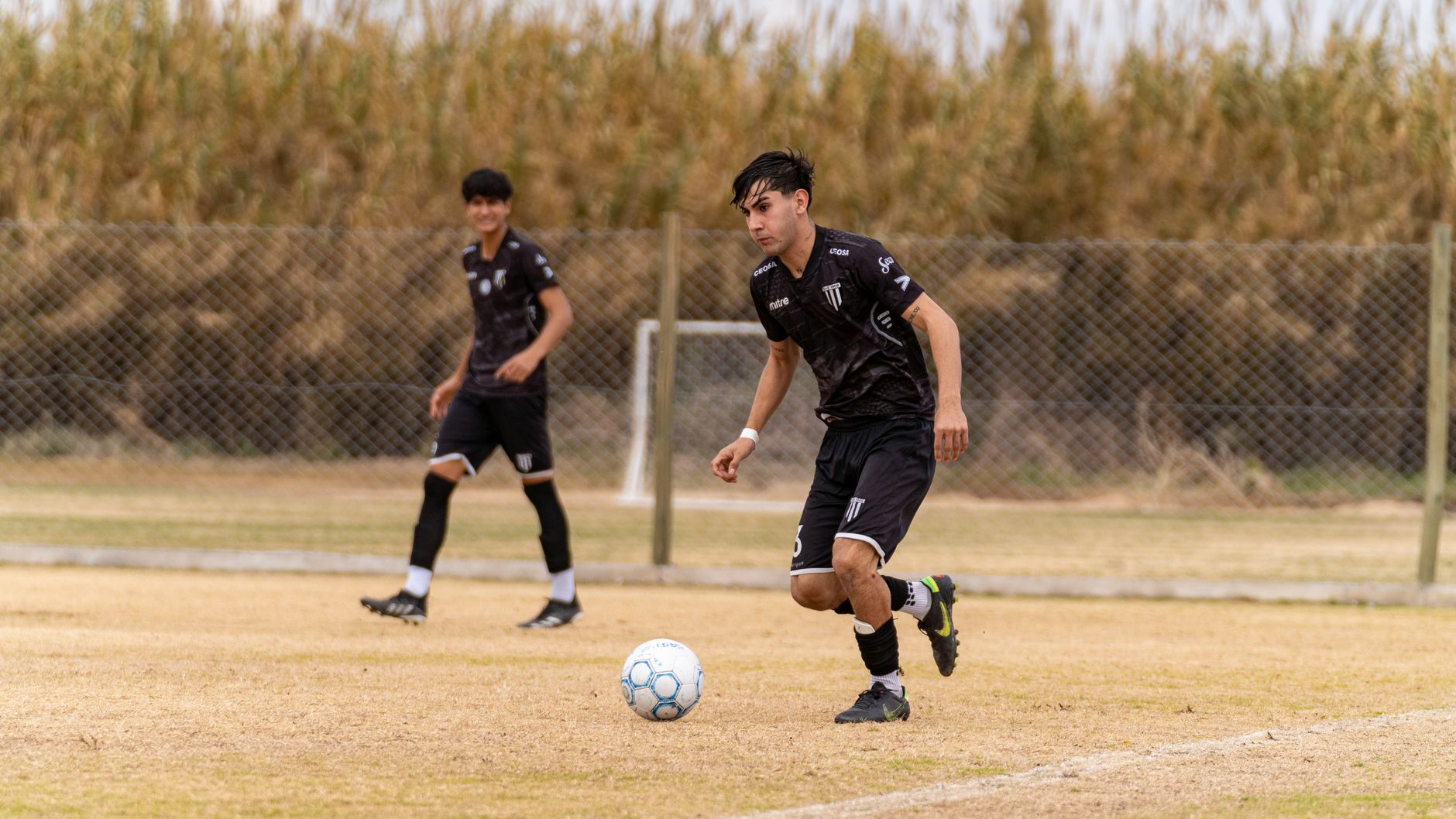
Photo by Franco Monsalvo on Pexels
Want a clearer performance framework before choosing your drills?
The Quick Comparison
The table below compares high-value football training drills by primary purpose, recommended setup, and progression. These drills can be adapted for grassroots players, academy athletes, and adults returning to the sport, provided intensity is increased gradually and technical quality remains the first checkpoint.
| Drill | Main quality | Basic setup | Beginner target | Advanced progression |
|---|---|---|---|---|
| Ball mastery circuit | Close control and coordination | One ball, four cones | 3 rounds of 45 seconds | Weak-foot-only sequences |
| Passing gate drill | Passing accuracy and weight | Two players, four gates | 30 completed passes | One-touch, moving receiver |
| Receive-and-turn drill | First touch and scanning | Three cones, one passer | 10 turns each side | Passive then active defender |
| 1v1 channel | Dribbling and defending | 12-by-8-metre channel | 5 attacks per player | Directional target and transition |
| Finishing circuit | Shooting technique | Goal, rebounder, cones | 12 controlled finishes | Pressure, timed movement |
| Repeated sprint drill | Acceleration and recovery | 10–20-metre lanes | 6 efforts | Ball-carrying and reaction cue |
A useful comparison must include transfer, not merely appearance. A complicated ladder routine can improve coordination, but a receive-and-turn drill may be more relevant to a midfielder who loses possession because the first touch travels too far. According to the FIFA Training Centre, training design should connect technique, perception, and decision-making wherever possible.
The first information gain is practical: if a player’s first touch regularly travels more than one metre away under no pressure, do not immediately add a defender. Reduce the receiving distance, slow the pass, and require a controlled touch into a clearly marked two-metre target zone. Progression should solve the error rather than hide it.
A simple selection rule
Use this sequence before every session:
- Identify one match problem, such as weak-foot passing or delayed scanning.
- Select one technical drill and one opposed drill.
- Define a measurable success target, such as 24 accurate passes from 30 attempts.
- Add speed or pressure only after the target is achieved twice.
- Record the result and adjust the next session.
This process prevents the familiar mistake of collecting drills without building a training system. For related principles, see our [Internal Link: beginner football training guide].
Round 1: Which Drills Build Ball Control and Passing?
Ball-control and passing drills should develop clean contact, body orientation, scanning, and decision speed. The most effective starting combination is a ball-mastery circuit followed by a passing-gate exercise and a receive-and-turn pattern. Together, these exercises train both the player’s relationship with the ball and the player’s ability to use that touch in a realistic direction.
The ball-mastery circuit can include inside touches, outside touches, sole rolls, V-pulls, foundations, and dribbling through four cones spaced 1.5 metres apart. Work for 30–45 seconds, rest for 20 seconds, and complete three rounds with both feet. The objective is not maximum speed; it is keeping the ball within playing distance while the torso remains balanced. The United States Soccer Federation commonly frames technique within the wider demands of perception and action, which is why players should periodically lift their eyes rather than stare continuously at the ball.
The passing-gate drill uses four small gates, each approximately 1.5 metres wide, placed around a 10-by-10-metre area. Two players pass through a nominated gate, move after the pass, and receive the ball on the back foot when possible. Begin with two touches and 30 successful passes, then introduce a one-touch rule for selected gates. The operational detail many articles omit is that the receiver should call the next gate before the ball arrives; this adds an information cue without requiring a full defender.
Why does first touch matter more than flashy footwork?
First touch matters because it determines the time, space, and angle available for the next action. A controlled touch into open space can remove pressure, while an impressive step-over followed by a poor touch still causes possession loss. For most players, first-touch direction should be trained before advanced dribbling combinations.
In the receive-and-turn drill, place a passer 8–10 metres from a receiver positioned beside a cone. The receiver checks away, returns toward the ball, scans over both shoulders, and takes the first touch either across the body or away from an imaginary defender. Complete 10 repetitions on each side, then add a passive defender who closes space at approximately half speed. The receiver must identify the defender’s position before choosing to turn, protect, or set the ball back.
The drill becomes much more useful when the coach or partner scores the decision, not just the contact. Award two points for a successful turn into the target zone, one point for a safe set pass, and zero for a touch that leaves the player exposed. This scoring method teaches that retaining possession is sometimes the correct football answer. It also mirrors match analysis used by professional teams, where a player’s action is interpreted within context rather than judged as an isolated trick.
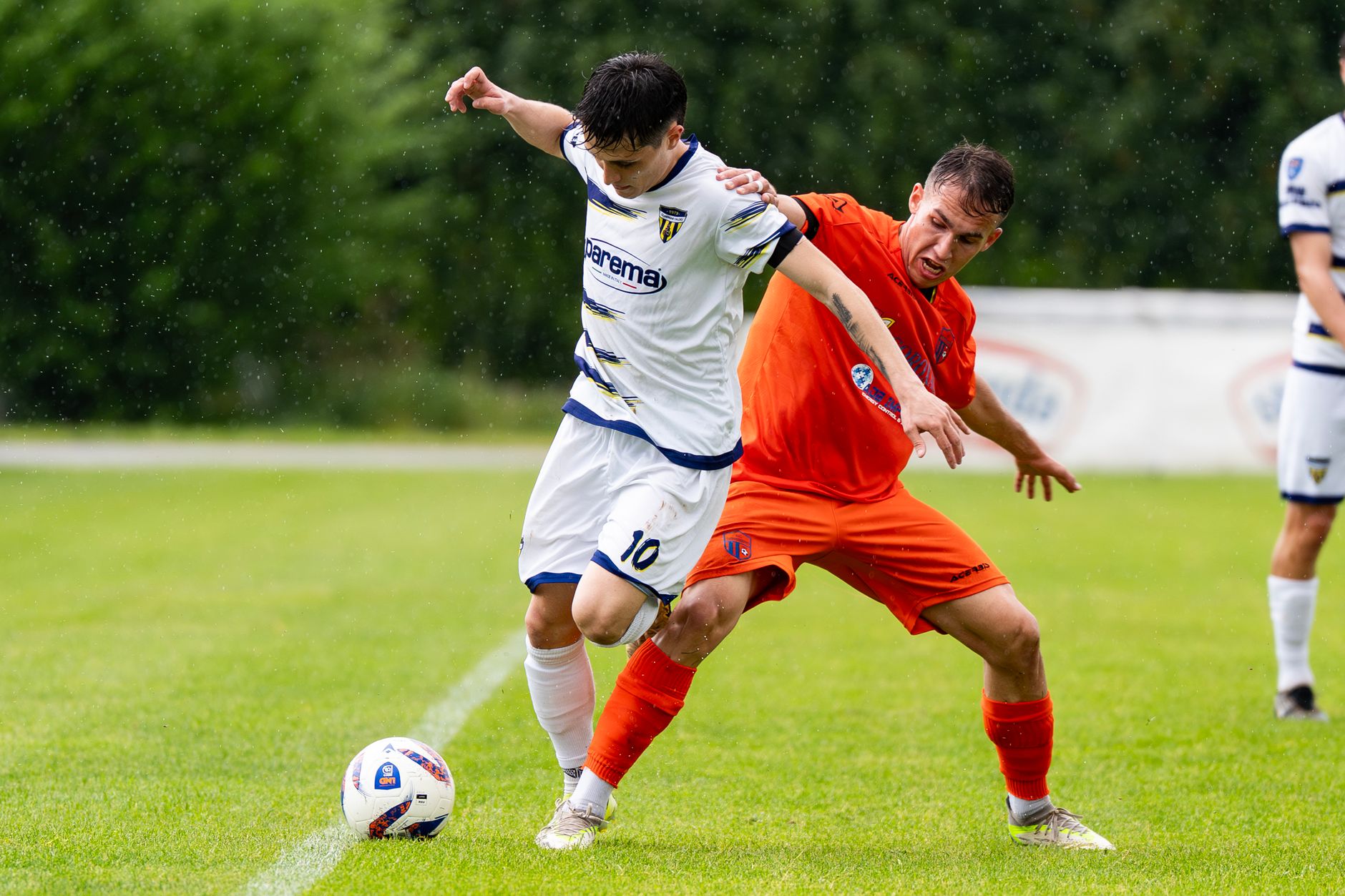
Photo by Davide Gargiulo on Pexels
Want to apply these technical progressions to match situations?
Round 2: How Can Drills Improve Speed, Agility, and Defending?
Speed and agility drills improve football performance when they include acceleration, braking, direction changes, and a reaction decision. Straight-line sprinting alone is insufficient for most match actions because football players repeatedly start, stop, curve, and respond to an opponent or ball. A safe progression is six 10-metre accelerations, followed by four 15-metre changes of direction, with full technical recovery between efforts.
Begin with a 10-metre sprint from a standing position, resting 30–45 seconds between repetitions. Then use a five-metre lateral shuffle, a five-metre forward sprint, and a controlled deceleration into a two-metre box. The player should lower the centre of mass before changing direction and avoid allowing the knee to collapse inward. The American College of Sports Medicine provides broad exercise guidance supporting progressive loading, adequate recovery, and individualisation; those principles are especially important for youth players and athletes returning after injury.
The most overlooked progression is the reaction cue. Ask the player to sprint toward a central cone, then respond to a coach’s color, hand signal, or pass direction. This transforms a pre-planned movement into a perception-action task. However, do not add reaction complexity until the player can brake safely. A tired athlete who cannot control deceleration is not completing a useful speed drill; that athlete is rehearsing poor mechanics.
Defensive drills that transfer to matches
Use a 1v1 channel measuring roughly 12 by 8 metres, with the attacker attempting to dribble over the end line and the defender trying to delay, channel, and win the ball. The defender should begin side-on, maintain an appropriate distance, and avoid diving in. Give each player five attacking and five defending repetitions, then switch the starting angle to reflect wide-area defending.
A second option is a 2v2 transition game with two mini-goals. After a turnover, the nearest defender presses while the partner provides cover. The key coaching points are communication, compactness, and immediate reaction after losing possession. The UEFA Training Ground offers a useful reference point for understanding how technical actions connect with tactical behavior.
Use this defensive checklist:
- Can the defender slow the attacker without crossing feet?
- Does the defender protect the most dangerous route first?
- Does the second defender provide cover at an angle?
- Do both players react within two seconds after losing possession?
- Does the exercise finish with a realistic transition?
This is where many enthusiastic beginners fail: they train speed as a personal fitness competition instead of as a football decision. A defender who arrives quickly but opens the inside channel may create more danger, not less.
Round 3: What Are the Best Finishing and Conditioning Drills?
The best finishing drills combine movement, receiving technique, shot selection, and recovery rather than producing random strikes from a static line. A practical circuit uses three finishing zones: a first-time finish, a controlled touch before shooting, and a finish after a curved run. Complete four repetitions from each zone per foot, then rest for two minutes before repeating the circuit.
For the first-time finish, a partner serves the ball from the side of the penalty area while the shooter arrives at the near or central zone. The player should adjust the final step, keep the head relatively stable, and select the finish according to the goalkeeper’s position. For the controlled-touch variation, the player receives outside the box, takes a touch away from pressure, and shoots within three seconds. The time limit is important because it discourages unnecessary touches without forcing reckless technique.
A useful information-gain metric is “quality shots per minute,” not total shots. If a player takes 30 shots but only six are balanced, accurately directed attempts, the session has rewarded volume over learning. Record the number of shots that meet three conditions: stable body position, target selection, and on-frame execution. After four sessions, compare quality percentage rather than celebrating a single spectacular strike.
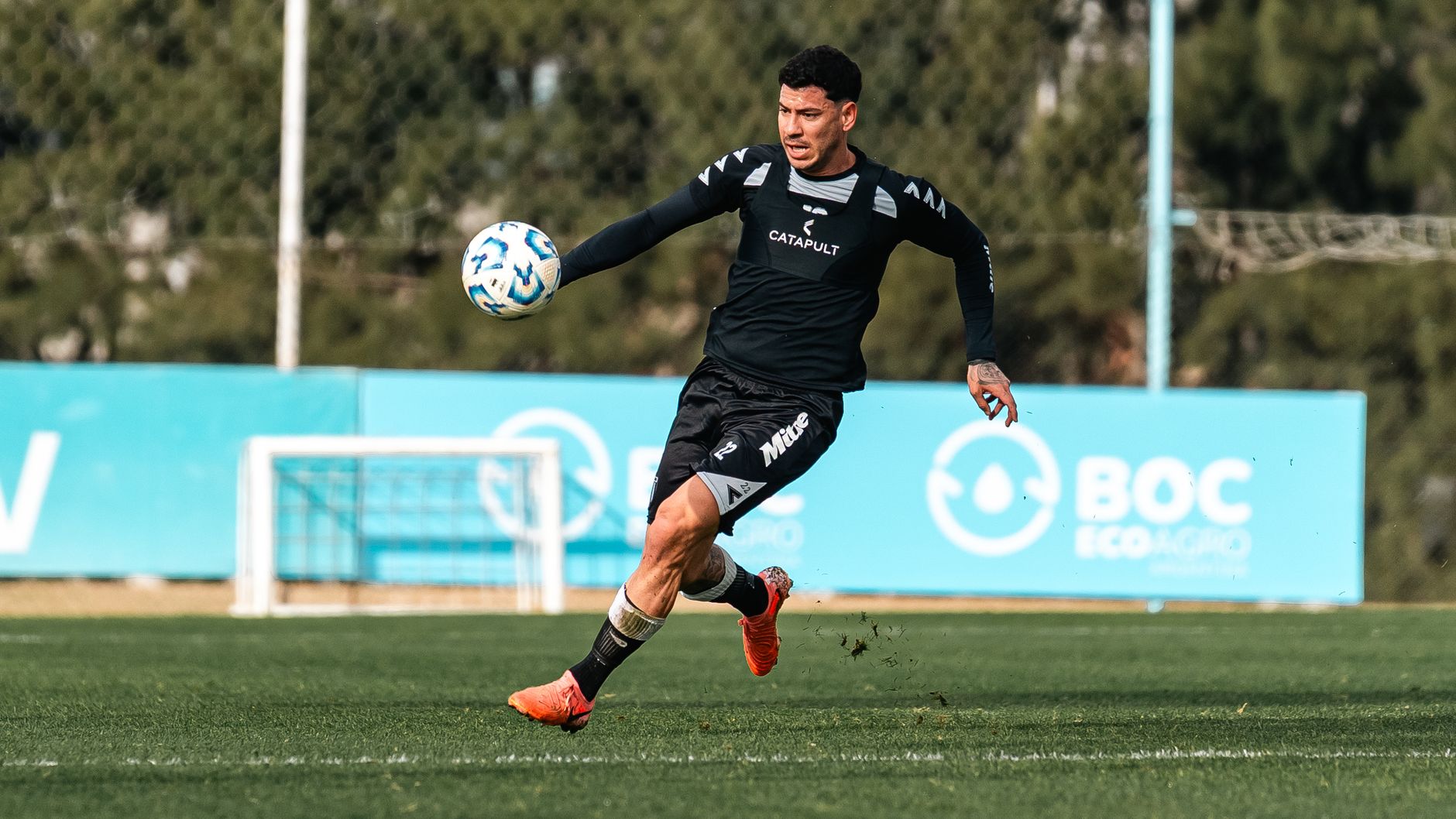
Photo by Franco Monsalvo on Pexels
See how tactical context changes finishing decisions.
Conditioning without destroying technique
Conditioning should support football actions, not leave players too exhausted to perform them correctly. A manageable repeated-sprint format is six 15-metre efforts at approximately 90–95% intensity, with 30 seconds of walking recovery. For intermediate players, progress to two sets of six efforts with three minutes between sets. Beginners should use fewer repetitions and longer recovery.
Another option is a four-minute technical interval: 20 seconds of dribbling through gates, 20 seconds of passing with a partner, and 20 seconds of walking, repeated four times. This format maintains a ball component while raising heart rate. Monitor whether pass accuracy falls sharply; a decline of more than 20% compared with the opening block is a practical signal to reduce volume or extend recovery.
Do not use professional workloads as a template for children. The National Strength and Conditioning Association, FIFA injury-prevention resources, and local medical guidance all support age-appropriate progression, warm-ups, and recovery. Players with pain, dizziness, acute injury, or unusual fatigue should stop and seek qualified medical advice. No drill is worth turning a manageable issue into a long-term absence.
For more structured planning, explore our [Internal Link: football fitness and conditioning guide].
The Final Score & Who Should Pick What
The final score is straightforward: the best football training drills are the ones that address a specific match problem, produce measurable improvement, and progress from low pressure to realistic pressure. Beginners should prioritize ball mastery, passing gates, first touch, and basic finishing. Intermediate players should add passive defenders, reaction cues, directional games, and timed decisions. Advanced players should use smaller spaces, fewer touches, positional constraints, and transition rules that force tactical awareness.
A balanced weekly plan can look like this:
- Monday: Ball mastery, passing gates, and 10-metre acceleration.
- Wednesday: Receive-and-turn work, 1v1 defending, and finishing.
- Friday: Small-sided transition game, repeated sprints, and set-piece technique.
- Saturday or Sunday: Match, light technical recovery, or mobility session.
- Every session: Record one technical metric and one physical or decision-making metric.
The contrarian conclusion is that advanced players should sometimes make drills easier, not harder. If pressure becomes so intense that the athlete cannot perceive, execute, or review the action, learning quality collapses. Reduce the speed, space, or defender for one block, restore clean movement, and then progress again. That is not laziness; it is an evidence-informed manipulation of difficulty.
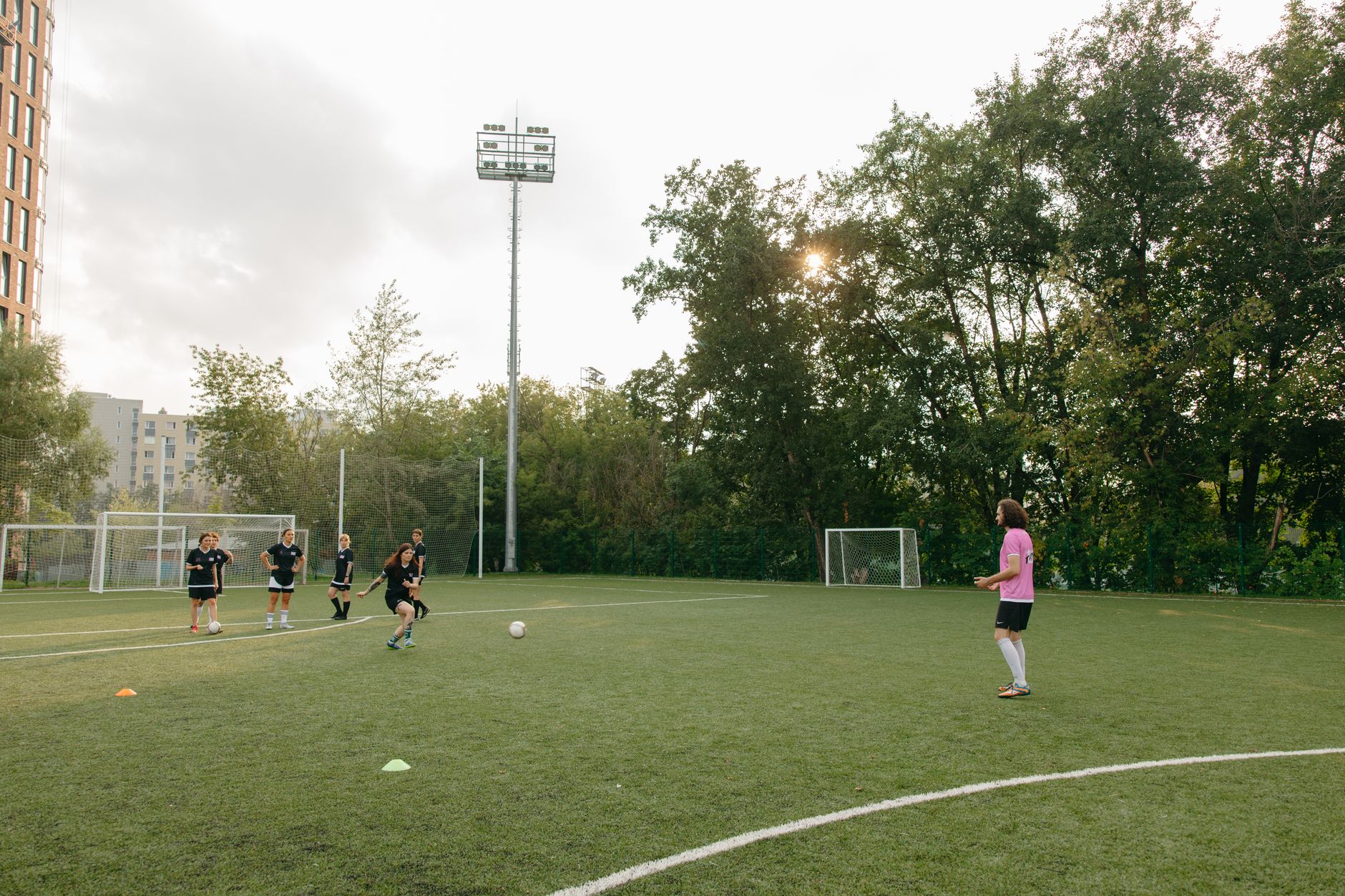
Photo by Anastasia Shuraeva on Pexels
Match Daily can help you connect training observations with wider team tactics and player performance.
A compact assessment framework
At the end of each week, score yourself from 1 to 5 in these categories:
- Ball control under pressure
- Passing accuracy with both feet
- First-touch direction
- Decision speed
- Finishing quality
- Acceleration and braking
- Defensive positioning
- Recovery between sessions
A score is useful only when supported by evidence. Write down the number of accurate passes, successful turns, quality shots, completed defensive actions, and sprint repetitions. After four weeks, compare trends rather than one-off results. If the numbers improve but match performance does not, the drill may lack transfer and should be redesigned with more scanning, opposition, or tactical direction.
A sensible final rule is to keep 70–80% of training within a technically manageable range and reserve 20–30% for challenging, high-pressure work. This is not a universal medical prescription; it is a practical coaching distribution that helps athletes practise correctly while still adapting to uncertainty. Listen up — this is the part that matters: consistency beats novelty, and a simple drill repeated with clear feedback will usually outperform a spectacular drill performed without purpose.
Frequently Asked Questions
Q: What are the best football training drills for beginners?
A: The best beginner football training drills are ball mastery, short passing, first-touch receiving, basic dribbling, and close-range finishing. Start with 10 minutes of dynamic movement, then complete three 45-second ball-control rounds and 30 accurate passes through gates. Keep the space open and use two touches before introducing pressure. Beginners should prioritize balance, correct contact, and confidence rather than speed or complex skill combinations.
Q: How often should I practise football training drills?
A: Most recreational and youth players should complete three focused football training sessions per week, with at least one recovery day between demanding sessions. A session can last 45–75 minutes depending on age, fitness, and match schedule. Add a light technical session after a match only if movement remains comfortable and technique does not deteriorate. Persistent pain, swelling, or unusual fatigue requires rest and qualified assessment.
Q: What is the difference between football drills and soccer drills?
A: Football drills and soccer drills generally describe the same sport, with “football” used widely in the United Kingdom, Europe, Australia, and many other regions, while “soccer” is common in the United States and Canada. The training principles are identical: ball control, passing, movement, defending, finishing, and conditioning. Searchers may use either keyword, so coaches should recognize both terms when finding resources.
Q: How can I improve my first touch quickly?
A: Improve your first touch by receiving passes from different angles and directing the ball into a planned target space rather than stopping it underneath your body. Complete 20 repetitions with each foot, alternating inside-foot control, outside-foot control, and touch-across-the-body actions. Add shoulder checks before the pass arrives, then introduce a passive defender. Measure success by how often the first touch stays within one metre of the intended target.
Q: Why do my football drills stop working when a defender applies pressure?
A: Football drills often fail under pressure because the practice has not progressed gradually from predictable repetition to perception and decision-making. Reduce the defender’s speed, enlarge the playing area, or allow two touches before rebuilding pressure. Use a scoring system that rewards safe retention as well as forward progress. Players should learn to scan before receiving, protect the ball with their body, and recognize when a simple return pass is the best option.
Q: How much equipment do I need for effective football training drills?
A: You can complete effective football training drills with one ball, four cones, a training partner, and access to a safe playing surface. A rebounder, mini-goals, colored markers, and a stopwatch improve variety but are not essential. A 10-by-10-metre grid is sufficient for many passing and receiving exercises, while sprint work requires a clear 10–20-metre lane. Inspect the surface and equipment before every session.
Q: Are football conditioning drills safe for young players?
A: Football conditioning drills can be safe for young players when intensity, volume, technique, and recovery are age-appropriate and supervised. Begin with short accelerations, games involving the ball, and complete recovery rather than maximal repeated sprints. Avoid copying professional workloads from FIFA World Cup or club environments because children have different development needs. Stop immediately for pain, dizziness, breathing difficulty, or acute injury, and seek qualified medical guidance.
To continue building a smarter training routine, visit our [Internal Link: advanced football tactics and player-development resources].
If you want to compare training concepts with current tournament tactics and player data, Match Daily provides additional football-focused analysis.
Thank you for reading.
Match Daily
High-Stakes Editorial · Premium Insights