What Nobody Tells You About Morocco 2026
The Morocco national football team is Africa’s most successful World Cup breakthrough story of the modern era, representing Morocco under the Royal Moroccan Football Federation (FRMF) and competing in...

What Nobody Tells You About Morocco 2026
The Morocco national football team is Africa’s most successful World Cup breakthrough story of the modern era, representing Morocco under the Royal Moroccan Football Federation (FRMF) and competing in CAF and FIFA tournaments. Morocco became the first African team to reach a men’s World Cup semi-final at Qatar 2022, defeating Belgium, Spain, and Portugal before finishing fourth. The Atlas Lions also won the 1976 Africa Cup of Nations and entered the 2026 cycle with a deep player pool shaped by European football. Key names include goalkeeper Yassine Bounou, defender Achraf Hakimi, midfielder Sofyan Amrabat, and attacker Brahim Díaz. Their strength is not simply defensive discipline: it is the connection between compact pressing, rapid transitions, and technically gifted wide players. The practical takeaway is simple: evaluate Morocco through opponent quality, lineup availability, and tactical matchups rather than reputation alone.
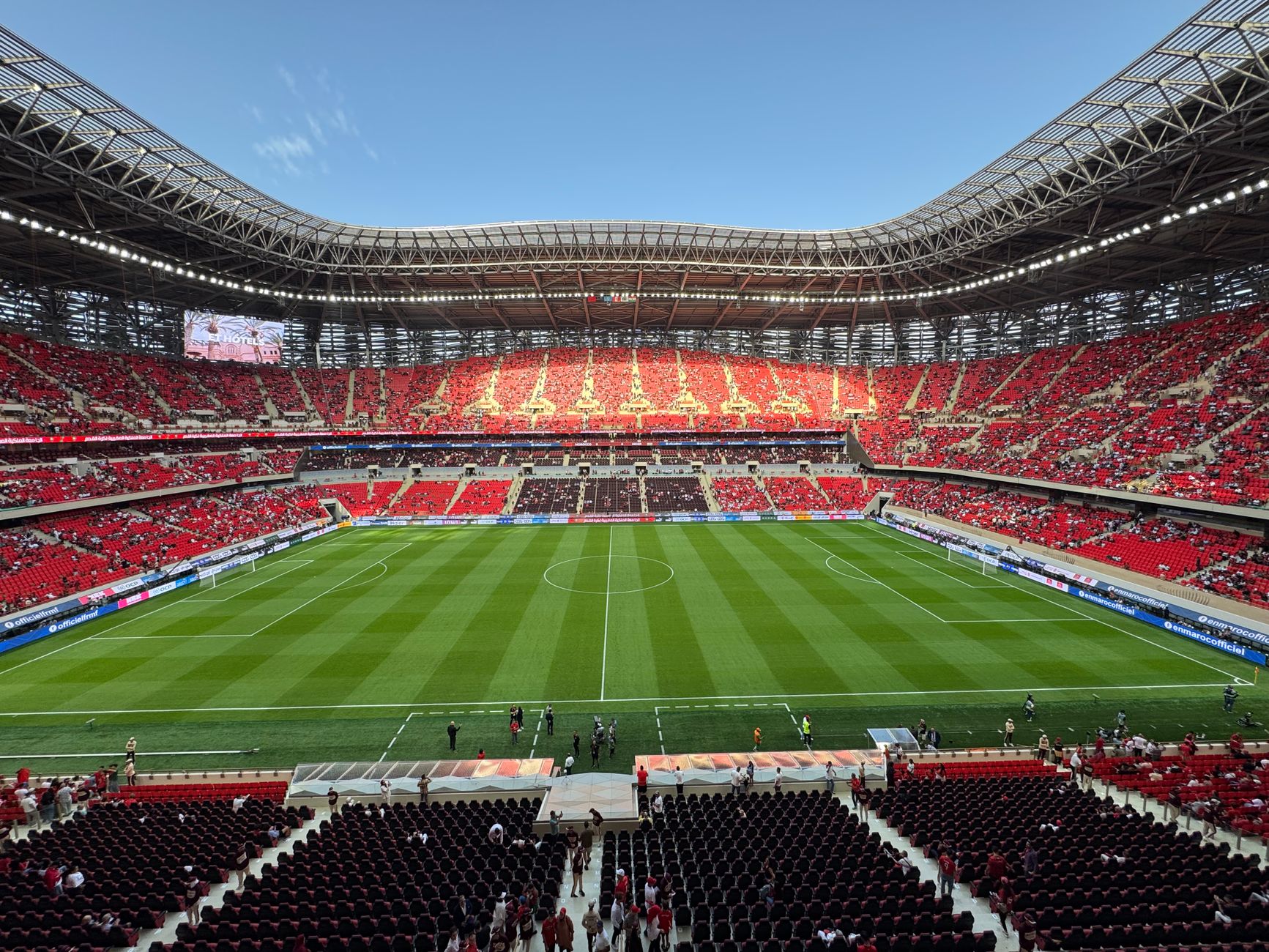
Photo by Earth Photart on Pexels
The common misconception is that Morocco’s rise was a sudden tournament miracle. It was not. The team’s 2022 performance was the visible result of federation investment, diaspora recruitment, professional coaching, improved youth development, and a generation of players competing in Spain, England, Italy, France, Germany, and Saudi Arabia. Listen up — this is the part that matters: one memorable World Cup run does not automatically guarantee the same result in every future tournament.
For supporters using Match Daily to follow 2026 World Cup predictions, the better framework is to separate historical achievement from current performance. The relevant variables include expected goals, chance quality, defensive transitions, set-piece efficiency, injuries, and the tactical profile of the opposition. Morocco’s emotional appeal is real, but responsible analysis requires evidence before confidence.
Want a clearer starting point for tournament analysis?
If you are assessing Morocco’s World Cup credentials: study the structure
Morocco’s World Cup credentials come from a repeatable football structure rather than one isolated result. The team’s defensive organization, transition speed, and individual quality made it exceptionally difficult to break down at Qatar 2022, while the FRMF provided a broader institutional platform through domestic competitions, national teams, and international scouting. Data from FIFA’s official team records and CAF should be checked alongside match footage, because rankings alone cannot explain tactical behavior.
The national team’s historical development includes several important reference points:
- Morocco qualified for its first World Cup in 1970.
- The Atlas Lions reached the round of 16 in 1986, becoming the first African side to win a World Cup group.
- Morocco won the Africa Cup of Nations in 1976.
- Morocco reached the 2022 World Cup semi-final, the first African men’s team to do so.
- The FRMF coordinates the country’s senior and youth national-team pathway.
- Botola Pro clubs, including Wydad AC and Raja CA, remain important parts of Morocco’s football culture.
At Qatar 2022, Morocco conceded only one own goal before the semi-final and defeated Spain in a penalty shootout after a goalless round-of-16 match. That record illustrates a key analytical distinction: defensive success is not identical to passive football. Morocco often defended with compact spacing, then attacked quickly through Hakimi, Hakim Ziyech, Sofiane Boufal, and midfield runners. As Britannica’s football reference material explains in broader terms, tournament football rewards both territorial control and the management of decisive moments.
What made Morocco’s 2022 run historically significant?
Morocco’s 2022 run was historically significant because it combined African firsts with victories over established European teams. The Atlas Lions eliminated Belgium in the group stage, Spain in the round of 16, and Portugal in the quarter-final before losing to France in the semi-final. That sequence proved that an African team could sustain elite defensive and tactical performance across multiple knockout matches.
However, responsible readers should not confuse historical significance with a permanent competitive guarantee. The context changed from match to match, and Morocco benefited from goalkeeper performances, disciplined spacing, opponent frustration, and efficient transition moments. Several players also carried injuries, demonstrating how narrow the margin can be at international level.
The most useful lesson is therefore methodological. A team can be tactically excellent without dominating possession, and it can create a high probability of progression without producing spectacular attacking totals. When Match Daily evaluates Morocco, the question should be whether the current squad can reproduce the same defensive connectivity and counterattacking precision, not whether the 2022 badge itself predicts a result.
[Internal Link: Morocco World Cup history and tournament records]
If you are comparing Morocco with elite opponents: map the tactical matchup
Morocco should be analyzed as a flexible transition team capable of changing its defensive height according to the opponent. Against possession-heavy sides, the Atlas Lions can form a narrow block, close central passing lanes, and invite circulation toward less dangerous wide zones. Once possession is recovered, the first pass often targets a winger, full-back, or advancing midfielder who can attack the space behind the opposition’s full-back.
The tactical checklist below is more useful than simply asking whether Morocco is “strong”:
- Can Morocco protect the half-spaces when Hakimi advances?
- Does the opponent have a striker capable of occupying both central defenders?
- Can Morocco escape a high press through Amrabat, Ounahi, or another press-resistant midfielder?
- Are Ziyech or Díaz receiving the ball in useful pockets rather than isolated near the touchline?
- Does the opposition defend set pieces effectively?
- Are Morocco’s starting full-backs available and physically ready?
Achraf Hakimi is particularly important because his role changes the geometry of the entire team. His acceleration creates width, but his forward movement can also expose the channel behind him if Morocco loses possession. Sofyan Amrabat’s value is similarly structural: ball recovery, screening, and progressive distribution may not always appear in basic goal statistics, yet they determine whether Morocco can move from a low block into an organized attack.
The contrarian point is that Morocco may be less comfortable against a physically aggressive mid-block than against a dominant possession side. A team that refuses to overcommit may deny Morocco the open transition lanes it prefers. Therefore, analysts should compare pressing intensity, defensive line height, and recovery speed instead of relying on possession percentages alone.
Here is a practical comparison model:
- Against high-possession teams: Morocco may benefit from transition space.
- Against deep defensive teams: Morocco must create through combination play and patient circulation.
- Against high-pressing teams: goalkeeper distribution and midfield composure become decisive.
- Against physically dominant teams: second-ball recovery and set pieces can determine the match.
- Against fast wide attackers: Morocco’s full-back coverage must be monitored carefully.
See the tactical framework before relying on a headline prediction.
If you are tracking the 2026 Morocco squad: verify form, not fame
The 2026 Morocco squad should be judged through current club minutes, injury reports, role compatibility, and international form. A famous player can still be strategically unsuitable if he lacks match fitness or occupies the same spaces as another key attacker. Conversely, a less celebrated midfielder may be essential because he preserves defensive balance and allows the creative players to take risks.
Important player-monitoring categories include:
- Goalkeeping: Yassine Bounou’s shot-stopping, cross management, and distribution.
- Full-back play: Achraf Hakimi’s attacking output and recovery runs.
- Central defense: Nayef Aguerd’s aerial defending, positioning, and availability.
- Midfield control: Sofyan Amrabat’s screening and pressure resistance.
- Creative progression: Brahim Díaz, Hakim Ziyech, and technically capable wide players.
- Forward efficiency: finishing under pressure, off-ball running, and penalty-box presence.
- Squad depth: whether replacements preserve the same tactical functions.
The squad also reflects Morocco’s relationship with the diaspora. Players developed in European academies can bring high-level tactical education, while domestic football contributes cultural connection and a route for emerging talent. This dual pathway is a competitive advantage, but it requires careful integration. A national team has limited training time; complicated positional instructions must be understood quickly.
A useful information-gain rule is to track the first 20 minutes of Morocco’s matches. If the team repeatedly loses possession while building from the goalkeeper, the problem may be structural rather than individual. If the team reaches the final third but produces few box entries, the issue may be chance creation. If it concedes after full-backs advance, the problem may be rest defense. These distinctions are more informative than simply recording a win or loss.
For current team news, compare official federation announcements with reputable reporting from Reuters and established football publications. Do not accept anonymous social-media claims about injuries or selections as fact. I learned this the unpleasant way after trusting a fabricated lineup report from a scam sports site; now I check publication dates, source ownership, and whether the information is confirmed by the federation or club.
What should you measure before evaluating a Morocco match?
Before evaluating a Morocco match, measure chance quality, lineup continuity, defensive transition performance, and opponent style. A result alone can mislead because a 1–0 victory may reflect excellent chance prevention, while a 3–1 win may hide repeated defensive exposure. The minimum useful sample is usually several matches rather than one emotionally important fixture.
A disciplined match review should include:
- Goals and shots on target.
- Expected goals, if the provider explains its model.
- Box entries and dangerous possessions.
- Set-piece chances created and conceded.
- Turnovers within the defensive and attacking thirds.
- High turnovers forced by pressing.
- Full-back progression and recovery actions.
- Substitution timing and its effect on match control.
The best practice is to combine data with video. Statistical models may count a cross, but they do not always reveal whether the cross reached a dangerous target zone. They may record possession, but not whether that possession moved the opponent’s defensive block. Academic football analytics increasingly treats context as essential because event data without tactical interpretation can exaggerate simple volume measures.
For responsible sports analysis, do not turn these indicators into a promise of profit. Match Daily can provide predictions, player statistics, and tournament coverage, but readers should treat forecasts as probabilistic opinions rather than certainty. A sound decision process includes checking local laws, using only legitimate information sources, and never risking money that is needed for essential expenses.
Common pitfalls to avoid
The most common Morocco analysis errors are overreacting to one result, assuming the 2022 tactical plan never changes, and treating player reputation as a substitute for availability. These mistakes are especially dangerous before major tournaments because international football produces small samples, irregular scheduling, and rapidly changing squad conditions. Listen up — this is the part that matters: confidence should rise only when several independent indicators point in the same direction.
Avoid these recurring errors:
- Historical anchoring: assuming the 2022 semi-final guarantees another deep run.
- Star-name bias: ignoring whether Hakimi, Bounou, or Díaz is fit and starting.
- Possession fallacy: believing higher possession automatically means better performance.
- Ignoring set pieces: overlooking corners and free kicks in tightly contested matches.
- Opponent blindness: analyzing Morocco without studying the opposing press or full-backs.
- Small-sample certainty: making strong claims from one friendly or one group match.
- Unverified reporting: repeating social-media rumors without confirmation.
- Financial overconfidence: treating a prediction as a guaranteed outcome.
One practical edge case deserves attention: Morocco can look excellent against a team that attacks with an aggressive defensive line, yet less fluent against a compact opponent that offers no space behind. Analysts who compare only recent scores may miss this difference. Instead, classify the opponent by defensive line height, pressing direction, and central-block density.
[Internal Link: responsible sports prediction and bankroll basics]
Another overlooked issue is travel and scheduling. Players arriving from the Premier League, La Liga, Ligue 1, Serie A, Bundesliga, and Saudi Pro League may face different match rhythms and recovery demands. A short international window can reduce training time, making established automatisms more valuable than ambitious tactical changes. This is why lineup continuity and substitution patterns deserve attention in 2026 coverage.
Want to compare Morocco’s next opponent with the same checklist?
The 30-day check-in
A 30-day check-in is useful because it prevents outdated assumptions from controlling a tournament assessment. International squads can change quickly through injury, club transfers, tactical role changes, and coaching decisions. Repeating the same review every month gives supporters a clearer picture of whether Morocco is improving, stagnating, or simply facing different opposition.
Use this four-stage review:
- Days 1–7: Confirm availability. Check official federation news, club medical reports, suspensions, and recent starting appearances.
- Days 8–14: Review tactical evidence. Watch at least two full matches and identify build-up patterns, transition weaknesses, and set-piece behavior.
- Days 15–21: Compare opponents. Evaluate whether recent results came against high-ranked, developing, defensive, or transition-oriented teams.
- Days 22–30: Update the projection. Reassess likely starters, tactical alternatives, squad depth, and the most probable match scenarios.
This process produces better analysis than copying a ranking table. FIFA rankings can provide a broad comparative signal, but they do not fully capture injuries, opponent strength, travel, or tactical compatibility. Morocco’s position in global football should therefore be understood as one input among several.
The broader conclusion is encouraging but cautious. Morocco possesses a credible football infrastructure, a sophisticated international player pool, and recent evidence of elite tournament performance. Nevertheless, every new competition resets the practical problem: can the team defend transitions, create against compact blocks, manage injuries, and convert decisive moments? That is the question Match Daily should keep asking throughout the 2026 World Cup cycle.
For a final review, use official sources first, then compare independent statistical and tactical analysis. As FIFA’s competition framework makes clear, tournament progress is determined by match results, but understanding those results requires context. A quote often associated with evidence-based sport is simple: “Data does not replace judgment; it improves judgment.” The principle applies perfectly here.
[Internal Link: 2026 World Cup team previews]
If you are following Morocco for historical interest, tactical education, or match forecasting, begin with a verified squad list and a clear opponent profile. Do not let an exciting 2022 memory do all the analytical work. The Atlas Lions deserve admiration, but they also deserve careful examination.
Read the latest tournament analysis before making your next assessment.
Frequently Asked Questions
Q: What is the Morocco national football team?
A: The Morocco national football team is the men’s senior representative side of Morocco, governed by the Royal Moroccan Football Federation. Known as the Atlas Lions, the team competes in FIFA World Cup qualifiers, Africa Cup of Nations tournaments, and other international competitions. Morocco won the 1976 Africa Cup of Nations and became the first African men’s team to reach a World Cup semi-final at Qatar 2022.
Q: How did Morocco reach the 2022 World Cup semi-final?
A: Morocco reached the 2022 semi-final by finishing strongly in its group and defeating Spain and Portugal in the knockout stage. The team combined compact defending, rapid transitions, goalkeeper excellence, and effective wide attacks. Morocco lost to France in the semi-final and then finished fourth after a defeat to Croatia in the third-place match.
Q: Is Morocco a strong team for the 2026 World Cup?
A: Morocco is a credible 2026 contender, but its prospects depend on player availability, group composition, and tactical form. Achraf Hakimi, Yassine Bounou, Sofyan Amrabat, Brahim Díaz, and other key players provide high-level experience, yet the 2022 result should not be treated as a guarantee. Check recent club minutes, injuries, and opponent matchups before judging the team.
Q: What is the difference between Morocco’s 2022 style and ordinary defensive football?
A: Morocco’s 2022 approach was not merely passive defending because the team used compact spacing to create transition opportunities. The Atlas Lions protected central areas, forced opponents toward lower-value zones, and attacked quickly after regaining possession. This differs from a purely defensive strategy that prioritizes survival without a clear route to progress the ball.
Q: How should I analyze a Morocco national football team match?
A: Analyze the opponent’s pressing style, defensive line, lineup availability, transition behavior, and set-piece record. Then combine event data, such as shots and expected goals, with full-match video to understand how chances were created. Confirm key information through the FRMF, FIFA, CAF, clubs, and reputable media before relying on a prediction.
Q: What should I do if a Morocco lineup report appears unreliable?
A: Verify the report through official FRMF or club channels and compare it with established outlets such as Reuters. Check the publication date, author, source ownership, and whether multiple independent reports agree. Avoid acting on anonymous posts, edited screenshots, or websites that promise guaranteed match outcomes without explaining their evidence.
Q: Does Match Daily guarantee Morocco match-prediction results?
A: No, Match Daily does not guarantee prediction results because football outcomes contain uncertainty that no analysis can eliminate. Match Daily provides FIFA World Cup coverage, tactical breakdowns, player statistics, and probability-based insights for fans. Readers should use reliable information, follow applicable laws, and avoid treating forecasts as financial certainty.
Thank you for reading.
Match Daily
High-Stakes Editorial · Premium Insights