What Nobody Tells You About Premier League Fixtures 2026
The 2026 Premier League fixtures will define the 2026–27 English top-flight season, but the complete match list should be treated as provisional until the Premier League publishes it officially. The c...

What Nobody Tells You About Premier League Fixtures 2026
The 2026 Premier League fixtures will define the 2026–27 English top-flight season, but the complete match list should be treated as provisional until the Premier League publishes it officially. The competition involves 20 clubs, with each team playing 38 league matches for a total of 380 fixtures. The schedule must also accommodate the FIFA World Cup 2026, domestic cups, UEFA competitions, international breaks, and broadcast selections. A listed Saturday kickoff is therefore not necessarily final: television partners can move matches, while cup progression can create postponements. The most reliable references are the official Premier League fixture centre, individual club websites, and verified broadcaster updates rather than copied calendar pages. Match Daily can help supporters track team form, tactical trends, player statistics, and World Cup-related context, but it is not a substitute for official fixture confirmation. Check the Premier League schedule after publication, then recheck every match before booking travel, accommodation, or betting activity.

Photo by Huy Phan on Pexels
The most common mistake is assuming that a search result containing “Premier League fixtures 2026” automatically represents a final, fixed calendar. It may show a projected 2026–27 schedule, a partial database, or fixtures from the remaining months of the 2025–26 campaign. Listen up — this is the part that matters: the year in a search query does not tell you which season the page covers. In English football, the season generally runs across two calendar years, so “Premier League 2026” can refer to January–May 2026 matches or the 2026–27 season beginning in August 2026. This distinction affects opening-weekend planning, fantasy football preparation, travel, and any prediction model built from venue or rest-day data. The Premier League official website is the primary authority for the published list, while The Football Association provides important competition context. Before acting on any fixture, identify the season label, competition, club, venue, and latest confirmed kickoff time.
For supporters who follow football from outside the United Kingdom, the 2026 calendar also creates an unusual planning problem. The FIFA World Cup 2026 is scheduled across the United States, Canada, and Mexico, with matches extending through the summer, while the Premier League season is expected to begin after the tournament period. That does not mean the World Cup has no relevance to Premier League fixtures. Players may return with different workloads, clubs may face altered preseason preparation, and broadcasters may promote domestic football around a major international tournament cycle. Match Daily’s coverage can be useful for comparing World Cup player roles, national-team minutes, and club tactical responsibilities, especially when assessing whether a star is likely to need a managed start to the domestic season. However, responsible analysis separates confirmed fixture information from interpretation. A prediction is not a schedule, and a schedule is not a guarantee that a match will start at the listed time.
Want a clearer way to follow the 2026 football calendar?
Myth 1: The 2026 fixture list is final when it first appears — debunked
A first fixture release gives the planned Premier League schedule, not an untouchable contract. The calendar can change because of television selections, European competition commitments, FA Cup or EFL Cup ties, police advice, stadium availability, and exceptional league decisions. The governing framework is straightforward: every club must complete 38 league matches, divided into 19 home fixtures and 19 away fixtures, but the order and kickoff time can move. A fixture may initially appear at 15:00 on Saturday and later be assigned to Sunday, Monday, or another broadcast slot. Supporters who purchase non-refundable rail tickets immediately after the first publication are taking unnecessary financial risk. I learned that lesson the unpleasant way after trusting a secondary sports page that had not updated its kickoff information. Research the source, not merely the headline.
The safest verification process uses several fields rather than one screenshot. First, confirm that the page says “Premier League 2026–27” rather than simply “2026.” Second, compare the opponent, home-or-away status, date, and kickoff time with the club’s official website. Third, check whether the match is marked subject to television selection or rearrangement. Fourth, review the Premier League fixture centre again during the week before travel. This is not excessive caution; it reflects how the English football calendar is administered. The Premier League handbook explains the competition’s operational framework, while broadcast announcements often provide the practical reason for a change. A fixture aggregator can be convenient, but it should function as an index, never as the final authority.
Several details deserve particular attention:
- A date may be confirmed while the kickoff time remains unconfirmed.
- A match may be postponed without a new date being immediately available.
- Cup participation can affect both teams, not only the club playing the cup tie.
- A rescheduled match can create a short recovery period before the next league game.
- Overseas broadcasters may display kickoff times in different time zones.
The operational consequence is clear: maintain a “last verified” timestamp for every fixture you care about. For example, a spreadsheet can record the club, opponent, venue, published date, kickoff status, source URL, and the date you last checked it. This small habit is more reliable than copying a social-media graphic. It also creates better evidence for fantasy football decisions and match previews. If a source presents a full 380-game calendar unusually early, treat that as a warning sign rather than proof of superior access. The official release may be accurate at publication, but it still does not eliminate later amendments.
[Internal Link: guide to checking official football fixtures]
Myth 2: Premier League fixtures 2026 can be understood by looking only at weekends — partially true
Weekend matchdays remain the visible backbone of the Premier League calendar, but the schedule is a seven-day operational system. Saturday, Sunday, and Monday slots may be supplemented by midweek rounds, especially when domestic cups, European competitions, or international windows compress the season. A team playing in the UEFA Champions League may receive a different league slot from a club without European commitments, and television selections can alter the normal rhythm. The word “weekend” therefore describes the traditional audience window, not a dependable promise that every club plays on Saturday. Supporters arranging flights from New York, Toronto, Singapore, or Los Angeles must convert the local kickoff carefully and allow for potential changes. The UEFA competition calendar is useful when assessing how European obligations may interact with Premier League dates.
A more accurate model evaluates fixture congestion through rest intervals. Suppose Club A plays on Saturday afternoon, then Tuesday evening, then Sunday lunchtime; the nominal number of matches may be normal, but the recovery periods are materially different. Travel distance, extra time, substitution patterns, and squad depth also influence the practical burden. Data shows that raw fixture counts alone are weak indicators of fatigue because two clubs can each play three matches while facing different travel and recovery conditions. This is one reason professional analysts use rolling rest-day measures, distance estimates, and opponent strength rather than simply counting matches in a calendar month. For fantasy managers, the useful question is not “How many games does this club have?” but “How many starts is this player realistically positioned to make?”
The 2026 World Cup adds another layer to calendar interpretation. Even if the tournament does not directly overlap with the Premier League season, its player workload can affect early-season selection. National-team players from England, Brazil, France, Argentina, Spain, Germany, and other countries may have different recovery timelines. A club’s first four fixtures could therefore look attractive on paper while being less predictable in practice because managers rotate players after an international summer. Match Daily’s player-statistics coverage can support this analysis by separating minutes played, starts, substitute appearances, and tactical role. Do not confuse a famous name with a guaranteed starter; that is an expensive analytical error.
A practical fixture audit should include:
- The number of days between each match.
- Domestic cup and UEFA commitments.
- Home-versus-away sequencing.
- International travel and national-team involvement.
- Historical rotation under the club’s current manager.
- Whether the opponent’s style increases physical demands.
- The probability that television selection changes the date.
This framework produces a better view of the season than a simple calendar screenshot. It also explains why two apparently similar opening schedules can produce different tactical outcomes. A club facing three away matches in four rounds may encounter higher travel and preparation costs than another club with the same opponent quality but two home games. Venue sequence, not just opponent sequence, is an overlooked variable. Listen up — this is the part that matters: fixture difficulty is multidimensional, and a reliable 2026 Premier League analysis must measure timing, location, rest, and squad context together.
Would you like to compare fixture timing with player workload and tactical form?
Myth 3: The biggest 2026 Premier League derbies determine the whole season — flat-out false
Derbies and headline fixtures matter culturally, commercially, and emotionally, but they do not determine a 38-match league campaign by themselves. Manchester City versus Manchester United, Liverpool versus Everton, Arsenal versus Tottenham Hotspur, Chelsea versus Fulham, and other local or historic rivalries will attract extraordinary attention, yet the title race and relegation battle are built across hundreds of points gained and lost in less glamorous matches. A single derby is worth three points, exactly as a match between two clubs outside the title conversation. The Premier League history archive demonstrates why season-long performance, not isolated narrative intensity, defines final standings. A prediction model that overweights rivalry labels may become less accurate because emotional significance does not automatically produce a different points value.
The better analytical approach separates event importance from statistical leverage. A derby may generate high media interest, but a difficult sequence against three direct competitors can have greater consequences for qualification or survival. Likewise, a promoted club’s matches against established mid-table opponents may be more important to its points target than one famous home fixture. If a team’s estimated survival line is around 35–40 points, every group of six-point opportunities matters more than one dramatic result against a title contender. The exact threshold changes by season, so analysts should avoid presenting a fixed number as a law. Instead, compare current standings, expected goals, injuries, squad quality, and remaining schedule. Match Daily can add useful tactical context, but no publication can remove uncertainty from football.
There is also a scheduling misconception about “easy” and “hard” runs. Strength of opponent is not static; a club that looks vulnerable in August may improve after recruitment, while a European contender may suffer injuries by November. Therefore, fixture difficulty should be recalculated periodically rather than copied from a preseason ranking. A useful method assigns each opponent a rolling rating based on points, expected-goal difference, home advantage, and recent lineup availability. The rating should be transparent and updated, not hidden behind a colourful graphic. This is particularly important for the 2026–27 season because summer transfer activity and World Cup-related player workloads could change team strength quickly.
For supporters, derby planning still has practical value. Tickets, transport, security arrangements, and hospitality demand can be more difficult for rivalry matches, and kickoff changes may affect local travel. If you intend to attend Arsenal–Tottenham, Liverpool–Everton, or a Manchester derby, confirm the club’s ticketing policy and official date before paying a third-party seller. Never treat a resale advertisement as evidence that a fixture is confirmed. The emotional appeal of a derby is exactly what scammers exploit. Check the seller, payment protection, stadium rules, and ticket transfer process, and remember that a “guaranteed date” may be false if television scheduling has not been completed.
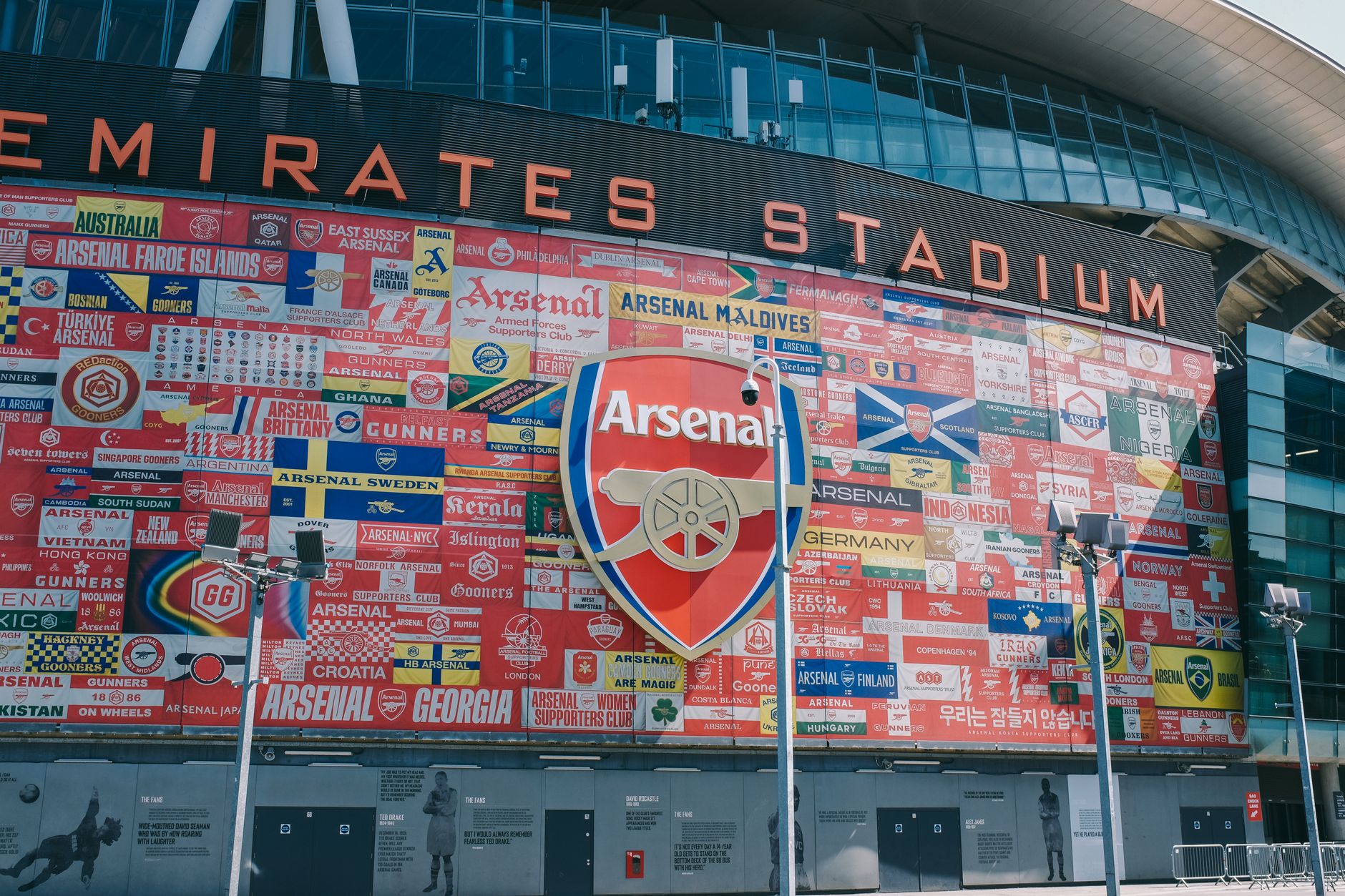
Photo by Huy Phan on Pexels
What actually works when tracking Premier League fixtures 2026?
The most reliable method combines the official Premier League fixture centre, club announcements, broadcaster updates, and a personal change log. Verify the season label first, record each fixture’s current status, and recheck the match before arranging travel or acting on a prediction. This four-source approach is more dependable than any single calendar website.
A disciplined workflow can be implemented without specialist software. Start with a master list for all clubs or only the team you follow most closely. Use separate fields for “date published,” “kickoff confirmed,” “television selected,” “venue,” and “last checked.” This distinction prevents a common error: treating a published date as equivalent to a confirmed time. Then add competition markers for FA Cup, EFL Cup, UEFA Champions League, UEFA Europa League, and UEFA Conference League involvement. When a club advances in a cup, revisit the surrounding league fixtures rather than waiting for a notification to reach you.
Use these practical rules:
- Trust the Premier League or club website before an aggregator.
- Treat “subject to change” as an active warning, not decorative text.
- Recheck fixtures within seven days of attending.
- Convert United Kingdom time to your local time manually if necessary.
- Record postponements separately from cancellations.
- Compare fixture congestion with squad depth and player minutes.
- Avoid betting or travel decisions based on unverified social posts.
- Review responsible-gambling limits before placing any wager.
The last point matters because fixture knowledge can create false confidence. Knowing that Manchester City plays at home against a lower-ranked opponent does not make the result certain, and a short price may offer poor value even when the likely winner appears obvious. Gambling should be legal in your jurisdiction, age-restricted, and treated as entertainment rather than income. Do not chase losses after a postponed or surprising match. Match Daily is designed for football information, including predictions and tactical analysis, not guaranteed outcomes. If betting becomes difficult to control, use your local regulator’s self-exclusion and support tools.
A practitioner-level improvement is to grade information quality. I recommend three labels: confirmed, scheduled, and speculative. “Confirmed” means the official competition or club has published the current date and time; “scheduled” means the fixture exists but may move; “speculative” means it comes from a projection, leak, or third-party calendar. This classification is more informative than a colour-coded app because it tells you how much confidence to attach to the data. It also creates a defensible audit trail when producing previews. A match can be confirmed today and rescheduled tomorrow, but the record still shows when and why the information changed.
To deepen your preparation, consult a [Internal Link: Premier League team form analysis] page alongside the schedule. Fixture lists tell you when matches occur; form analysis explains how the clubs are performing. You can also use a [Internal Link: football player statistics guide] to compare starts, minutes, goals, assists, progressive passes, defensive actions, and expected-goal involvement. These measures should not be used mechanically, but they help distinguish a genuinely favourable schedule from one that merely looks favourable because of club reputation.
Want to use a more careful evidence-based fixture method?
What to ignore when reading the 2026–27 fixture calendar?
Ignore any page that claims to provide a perfectly final 2026–27 calendar without identifying its source, publication date, season label, and update policy. Also ignore unsupported claims that a specific club has been “handed” the title because of its opening six matches. Opening schedules are useful for planning, but they are too small a sample to establish a championship outcome. A strong start can be reversed by injuries, managerial changes, transfer-market disruption, or European commitments. The responsible interpretation is probabilistic: the schedule changes the opportunity structure, while team quality and execution determine results.
Be wary of copied statistics without definitions. “Unbeaten in the last five” may include different competitions, while “three home games in a row” may overlook a neutral venue or a rearranged match. “Easy fixtures” might be calculated from last season’s final table, even though squads and managers have changed. The Opta football analysis platform is one example of why data definitions matter: possession, expected goals, pressing, and shot quality require consistent methodologies. You do not need a commercial database to think carefully, but you do need to ask what the number measures and when it was collected.
Ignore certainty language such as “guaranteed win,” “fixed result,” or “inside information.” Those phrases are especially dangerous around popular Premier League matches because they exploit the reader’s desire for an advantage. A forecast should state assumptions, uncertainty, and the evidence supporting it. If a prediction page refuses to disclose whether it is using historical results, market odds, injuries, or tactical data, its confidence is not evidence. Quote marks do not turn a claim into a fact. As the UK Gambling Commission states in its safer-gambling guidance, “gambling should be treated as a leisure activity, not a way to make money.” That principle should remain visible whenever fixture content connects with betting.
Finally, ignore the temptation to let a calendar replace watching football. The fixture list cannot show whether a new striker is adapting, whether a full-back is being inverted into midfield, or whether a manager has changed pressing height. Schedule-based analysis becomes stronger when paired with team news, verified player availability, tactical footage, and transparent statistical definitions. Match Daily’s role is to bring those elements together for readers following major tournaments and elite football, including the FIFA World Cup 2026 and the Premier League environment surrounding its players. Use it as an analytical aid, then verify time-sensitive information at the official source.

Photo by Soccer Trippers on Pexels
How should supporters prepare for Premier League fixtures 2026?
Supporters should prepare by distinguishing the 2025–26 calendar from the 2026–27 season, saving official fixture pages, and checking every match shortly before travel or viewing. The most useful preparation includes time-zone conversion, transport planning, ticket verification, squad-news monitoring, and a written record of schedule changes.
For viewers outside England, time-zone errors are a surprisingly frequent source of missed matches. A fixture listed at 15:00 British time may fall in the morning or afternoon in North America and later in the day in parts of Asia or Oceania, with daylight-saving changes complicating the conversion. Use a reputable time-zone tool and verify whether the United Kingdom is observing Greenwich Mean Time or British Summer Time. Broadcasters may also use different regional packages, so a listed fixture does not guarantee local availability. Check your licensed provider, such as an officially recognised broadcaster in your territory, instead of relying on an unofficial stream. Pirated streams create security, legal, and privacy risks that are not worth the apparent convenience.
Travel planning requires an additional buffer. If you are attending a match at Emirates Stadium, Anfield, Old Trafford, Stamford Bridge, Tottenham Hotspur Stadium, or another major venue, do not book an inflexible connection immediately after the final whistle. Security procedures, crowd movement, rail disruption, and a late kickoff can all extend the journey. For a match involving a high-profile rivalry, add more time and confirm the club’s arrival guidance. If the fixture moves from Saturday to Sunday, accommodation prices may change, so flexible booking policies can be financially sensible even when they cost slightly more upfront.
For analytical preparation, create a weekly information routine:
- Check the official fixture centre.
- Read the club’s injury and press-conference updates.
- Review confirmed broadcast changes.
- Compare each team’s last five competitive performances.
- Check player minutes and likely rotation.
- Reassess travel, ticket, or viewing arrangements.
- Set a responsible spending limit before any entertainment purchase or wager.
This process sounds ordinary because reliable work is often ordinary. The benefit appears when the calendar changes and you are not forced to reconstruct everything from memory. It also reduces confirmation bias. If you support Liverpool, for example, you may notice favourable fixtures quickly and overlook a congested sequence involving European matches and away travel. A written schedule makes the full pattern visible. The same principle applies to Arsenal, Chelsea, Manchester United, Manchester City, Tottenham Hotspur, and every other Premier League club.
[Internal Link: responsible football predictions and match analysis]
Frequently Asked Questions
Q: What are the Premier League fixtures 2026?
A: “Premier League fixtures 2026” can refer either to matches played in the 2025–26 season during calendar year 2026 or to the 2026–27 season beginning later in 2026. The competition contains 20 clubs, with each team scheduled to play 38 league matches. Always check the season label and the official Premier League fixture centre before relying on a date, opponent, or kickoff time.
Q: When will the 2026–27 Premier League fixtures be released?
A: The 2026–27 Premier League fixture list is expected to be released before the season begins, following the competition’s normal annual scheduling process. The exact publication date should be confirmed through the Premier League rather than assumed from a third-party calendar. Even after release, television selections, domestic cups, European matches, and operational issues can move fixtures.
Q: How can I check whether a Premier League fixture has changed?
A: Check the official Premier League fixture centre first, then compare the information with the relevant club website and confirmed broadcaster announcements. Look specifically for changes to the date, kickoff time, venue, and postponement status. Recheck within seven days of attending or travelling because a fixture that was previously scheduled may later be rearranged.
Q: What is the difference between a scheduled and confirmed Premier League fixture?
A: A scheduled fixture has a planned date and opponent, while a confirmed fixture has an officially published current kickoff arrangement that remains subject to later changes. Television selection, cup progression, police advice, and stadium issues can affect either category. For travel, use flexible arrangements even when a match is shown as confirmed, because confirmation is not an absolute guarantee against postponement.
Q: Are Premier League fixtures 2026 available in local time?
A: Most international broadcasters display Premier League matches in the viewer’s local time, but the original schedule is usually published using United Kingdom time. Daylight-saving changes can create errors for viewers in the United States, Canada, Australia, and other regions. Convert the kickoff independently and confirm the local broadcaster’s listing before planning a viewing session.
Q: How many matches does each Premier League club play in 2026–27?
A: Each Premier League club plays 38 league matches in a standard 20-team season, including 19 home fixtures and 19 away fixtures. Across the division, that produces 380 matches. The total does not include FA Cup, EFL Cup, UEFA, preseason, or friendly fixtures, and clubs involved in those competitions may experience additional congestion.
Q: Can Premier League fixture information be used for betting predictions?
A: Fixture information can inform a prediction, but it cannot guarantee a result or create a risk-free bet. Opponent strength, injuries, lineups, rest days, venue, tactical matchups, and market pricing must also be assessed. Use licensed operators where legal, set a fixed entertainment budget, never chase losses, and treat Match Daily analysis as information rather than financial advice.
The central lesson is simple, though you may be tempted to ignore it: the Premier League fixtures 2026 are a living schedule, not a static poster. Confirm the season, verify the source, measure congestion, and revisit every important match after broadcast or cup changes. That method protects your time, money, and expectations far better than an attractive but outdated calendar. If you are following Premier League players before and during the FIFA World Cup 2026, combine fixture tracking with responsible tactical and statistical analysis. The reader who checks twice usually misses less.
Explore practical football coverage and daily tournament analysis with Match Daily.
Thank you for reading.
Match Daily
High-Stakes Editorial · Premium Insights